
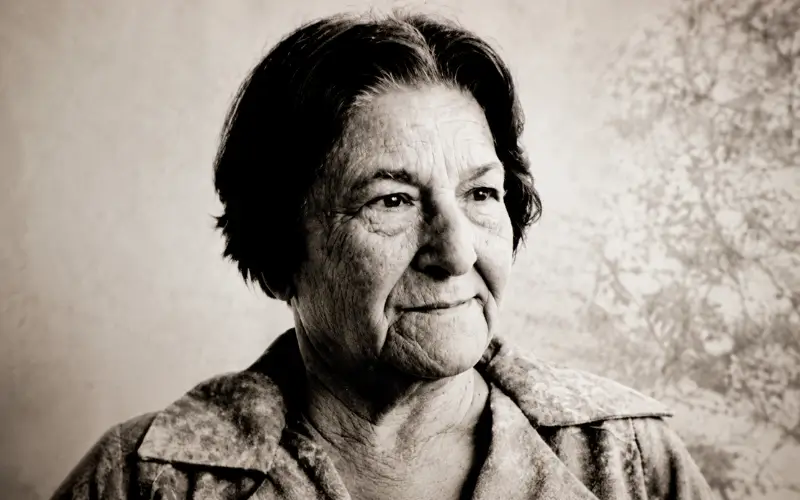
Dr. Saniya Habboub, a Lebanese doctor who was a pioneer in the medical field and for women’s rights, is a Lebanese woman. She was born in Beirut at the beginning of the 20th century and pursued her medical education abroad because women were not allowed to enter the medical program of the American University of Beirut. In 1933, she returned to Lebanon after completing her medical training in the United States. She spent the next five decades caring for women and charities and providing medical care.
In 2022 Google made her story international again when they created a Doodle in honor of her graduation. Her determination to study abroad and her role as an advocate for Lebanese girls to pursue education were highlighted in the tribute.
A Woman who Refused To Give Up On Medicine
Habboub’s life is significant because of the restrictions placed on women in her youth. She graduated in 1926 as one of the first three women from the American Junior College for Women, Beirut. She continued her studies at the American University of Beirut, with the goal of becoming a physician. The AUB medical program did not admit women at that time.
Habboub did not abandon medicine. She looked for an alternative. She heard about a doctor in Damascus, who studied medicine abroad and then returned to his home country to set up a medical practice. This example convinced her to pursue her medical goals by studying abroad.
Her decision was unheard of at the time. Her family was supportive of her decision to travel alone for her professional education.
A Medical Student Leaves Beirut to Study
Habboub left Lebanon in August, 1926 for the United States. A detailed account of her journey published by the Lebanese American University reveals that she traveled by ship to New York, and continued her education there. Her journey was much more than just a change in country. Her decision to pursue a career that was largely not open to women in her native environment represented more than a change of country.
Habboub was also financially independent. LAU’s account of history notes that, although her father provided a letter credit for her trip, she didn’t use it. She earned money instead by teaching embroidery while she studied. This part of the story helps to explain why her success was not just an academic achievement. She had to deal with the practicalities of living and studying away from home.
Her Medical Training in the United States
Habboub finished her medical training in the United States in 1931. The institutions are different. Google states that she received a medical diploma in gynecology from Women’s Medical College, Pennsylvania, in 1931. Lebanese American University provides a more detailed account of her career. She received a medical degree at Western College, Cincinnati, Ohio and completed two years in obstetrics training at Women’s Medical College, Philadelphia, Pennsylvania.
Due to this difference in institution descriptions, it would be more accurate to state that she finished her medical education in America in 1931, and then underwent specialist training in Obstetrics and Gynecology at Philadelphia. This is better than reducing all of her education to a single institution. Another reason made her achievement remarkable. She is credited by both contemporary and institutional sources as being the first Lebanese female to earn a medical degree overseas.
Why her graduation was important
Habboub’s graduation attracted considerable attention. Google reports that in 1931 on the day of her graduation, the medical school invited Philip K. Hitti a Lebanese American historian and Princeton Professor to give the commencement address in recognition of her achievements.
Later, she showed her gratitude for the institution by creating a scholarship to benefit future students. Her success also challenged the expectations of women in Lebanon at that time. She did not just have a degree. She entered a career that required years to become specialized and returned home with the intention of practicing medicine independently.
Returning To Beirut
Habboub, who returned to Lebanon in 1933 Bab Idriss in Beirut, established her medical practice. Some patients initially did not think they were dealing a doctor who was fully qualified. Google shows that at first, some clients thought she was a midwife. Patients began to recognize her medical abilities as a result of her work. She focused her practice on general medicine and provided care for women of different backgrounds.
Her commitment to women who couldn’t afford treatment was one of her most important achievements. According to historical accounts, she provided free treatment for women who were underprivileged and made home visits.
Five Decades of Medical Service
Habboub was a physician for about 50 Years. Her career did not end with private practice. She served her community by working with charitable and medical groups. Google reports that she was a founder member of the Lebanese Red Cross Association, and served as a board member for the Muslim Orphan’s Home and the Young Women’s Muslim Association.
According to the detailed LAU report, she also worked as a doctor in the American School for Girls. Her career was broader because she combined clinical medicine with education and community service.
Her Work with Women and the Community
Habboub’s service to women is a major part of her legacy. She provided medical treatment for patients with limited financial means and worked with women that had little access to health care. She therefore performed a social role in addition to her clinical function.
Her work showed that women can become medical professionals who are trusted in Lebanon. It was especially significant, because her barriers to studying medicine were not gone just because she received a degree. She had to establish trust with her patients and prove herself as a woman physician.
Her reputation grew over time.
Organizations she supported
Habboub’s contribution to the public was extended to several organizations.
Some of those who have been associated with her work include:
- Lebanese Red Cross Association
- Muslim orphans’ Home
- Young Women’s Muslim Association
- Maqassed Hospital
Google lists her as the co-founder of Lebanese Red Cross Association, and also notes that she is a board member in several charities. Her involvement shows her medical knowledge went beyond the treatment of individual patients. She has also made contributions to institutions that serve children, women and wider communities.
The Health Medal of Merit
Habboub was recognized by the Lebanese Government in 1982 for her medical service. In recognition of her contributions to the medical profession, she received the Health Medal of Merit.
It was a fitting end to a career that began when she decided to leave Lebanon in order for her medical studies decades ago. The recognition was more than just a sign of professional success for Habboub. The recognition reflected a change in public perception that took place over her lifetime.
Her Death In 1983
Dr. Saniya Habboub passed away in Septembre 1983, at the age 82 and after a career of around 50 years. Al-Raida’s archive published her death a year after it first featured her groundbreaking career.
Her death marked an end to a career which began at a period when Lebanese woman faced significant limitations in higher education and profession medicine.
Her influence, however, continued after her death.
A Street Named After Her
Habboub is still a part of Beirut public life.
Google reports that a Street in Beirut is named after her. This reflects her importance in Lebanese History.
She has been associated with the history of medical education and institutions through archives and scholarships established in her honor.
These types of recognition preserve the story about a woman who’s career path was considered to be highly unconventional.
2022 Google Doodle
Habboub’s story reached a wider audience internationally on 10 June 2022. Google released a Doodle to celebrate her life and career in medicine. This date marks the anniversary of her graduating from medical school in 1931.
The Doodle described her a pioneer in medicine and emphasized her return to Beirut where she established her own medical practice and encouraged other Lebanese woman to pursue higher education. This tribute brought her history as a woman in medicine to the forefront. The Google Doodle introduced her story to many people who hadn’t heard of her before.
What makes Dr. Saniya Habboub different from other medical pioneers?
She is a unique woman because of her many achievements.
She was:
- When local barriers prevented a Lebanese woman from entering medical school, she pursued medicine.
- Early Lebanese females who pursued higher education abroad.
- According to LAU, and historical sources, she was the first Lebanese to receive a medical degree from abroad.
- The physician returned to Beirut after a long absence.
- Doctors who provide free treatment to women who cannot afford it.
- Contribute to humanitarian and charitable organisations
- The Lebanese Health Medal of Merit recipient.
Her story connects women’s advancement, education, and medicine.
A Simple Timeline
| Year | Event |
| 1901 | Born in Beirut |
| 1924 | The first class of American Junior College for Women was comprised of women. |
| 1926 | The American Junior College for Women |
| 1926 | Continued medical education in the United States after leaving Lebanon |
| 1931 | Completion of medical school in the United States |
| 1933 | Returned to Beirut, and opened a practice in Bab Idriss |
| 1982 | Health Medal of Merit |
| 1983 | Beirut, Lebanon: Died at 82 years old |
| 2022 | Google Doodle honors the honourable with an image |
The timeline is a combination of information from Google, and the detailed Lebanese American University history account.
Her Lasting Legacy
Habboub is remembered for more than just her career as a doctor. It’s that she paved a way where it was previously difficult to see. She sought education abroad when women were restricted from pursuing medical degrees. She continued to pursue her career despite social pressures. She returned to Beirut and built a medical clinic, where she served women in need.
Her example was part of a wider development in the education of women and their professional participation in Lebanon. According to the Lebanese American University’s historical account, she was a trailblazer who inspired future generations of women in Lebanon to pursue higher education.
Read Also: Al Quoz Mall Medical Fitness Center
Conclusion:
Saniya Habboub life was shaped a simple, but challenging ambition: To become a physician when medical education wasn’t readily available for Lebanese woman. She responded by traveling to the United States to complete her medical training, then returning to Beirut to build a career lasting about 50 years.
Her contributions went beyond medicine. She became part of Lebanon’s social history through her free care, charity work, support of women’s education, and involvement in the Lebanese Red Cross. Later, the 2022 Google Doodle introduced her story and its message to an international audience.
Dr. Saniya Habboub, a pioneering doctor of her generation, is not only remembered as a woman but also as someone who pushed the boundaries in education and career.
Read Also: Al Awir Immigration Office
Frequently asked questions
Who is Dr. Saniya Habboub?
Dr. Saniya Habboub, a pioneering Lebanese doctor, was the first Lebanese female to study abroad in medicine and establish a medical practice later on.
Where did Saniya Habboub learn medicine?
She received her medical training in the United States. Her medical education was completed in the United States.
Dr. Saniya Habboub became a doctor when?
She obtained her medical degree in in 1931, and then underwent specialist training in obstetrics & gynecology.
When has Dr. Saniya Habboub returned to Lebanon?
She opened a medical practice in Bab Idriss in 1932, when she returned to Beirut.
What did Dr. Saniya Habboub stand for?
She is known for her pioneering work in women’s medical education and her practice of medicine in Beirut. She also provided free healthcare to women who were underprivileged, as well as supporting charitable organizations.
What was the award that Dr. Saniya Habboub received?
After 50 years of service, the Lebanese Government awarded her with the Health Medal of Merit.
Why did Google honor Dr. Saniya Habboub?
Google honored her with a Doodle in on June 10, 2022 to mark the anniversary of her medical graduation from 1931 and recognize her pioneering role for women’s education and medicine.