
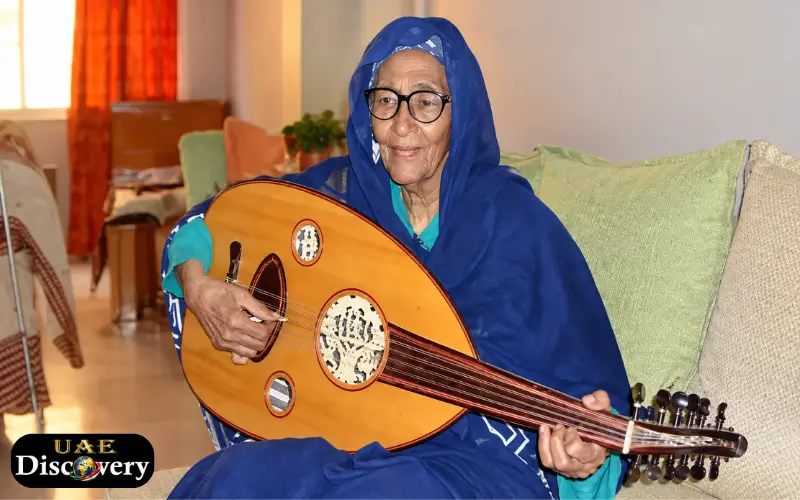
Asma Hamza was an important Sudanese composer and oud player. She was building her music career when the world did not have many options for women to be composers. Her love for singing started in her childhood and soon turned to the oud before progressing to composition, working with singers and poets, and music education. In 2023, Google honoured her with a Doodle celebrating her life internationally.
Quick Facts
| Detail | Information |
| Full Name | Asma Hamza |
| Born | 1932 |
| Birth Country | Sudan |
| Profession | Composer and oud player |
| Main Instrument | Oud |
| Musical Field | Sudanese and Arab music |
| Major Achievement | Recognition in the Laylat AlQadr AlKubra competition |
| Achievement Year | 1997 |
| Google Doodle | July 17, 2023 |
| Died | 2018 |
Who Was Asma Hamza?
Asma Hamza was a Sudanese composer and Oud player. She was one of the first female artists to be known in Sudanese music. From an early age, she was fond of music and wanted to sing. Later, she switched to the oud due to voice troubles. Her father helped her and supported her in getting an oud.
Her learning was from experience and listening. Later, she entered into music composition and collaborated with Sudanese singers and poets. She was important for her career because, at that time, music composition was mostly done by men. She became an influential woman in Sudanese musical history through her work and achievements.
Early Life and Interest in Music
Born in 1932 in Sudan, she became interested in music at an early age. She was introduced to singing and musical performances in her family that fostered her interest in becoming a performer. Her original ambition was to become a singer. But her vocal ability did not allow her to take that route. But she didn’t give up music – she discovered a different means of involvement.
She began to whistle songs and melodies. This skill caught her father’s eye. He realized that she had a good ear for music and thought to help her in her musical passion by purchasing an oud. That was a pivotal moment in her life. The oud enabled her to delve deeper into musical composition, as well as to simply reproduce melodies.
Another quality of hers as a musician is evident in her early experience as well. She was flexible, changing her path when one wasn’t available.
How Asma Hamza Learned the Oud
She began to use the oud in her musical life. Round body, fretless-necked instrument of the Middle East. She began learning it by listening to songs and copying their melodies. She could recall melodies, which enabled her to learn rapidly. She could listen to a song, remember its tune, and reproduce it on the oud. This gave her a keen musical ear, which later aided her in her formal studies.
According to Google, she was one of the first formally trained women oud players in 1946. Both her early practice and her training enabled her to develop her skills as a musician. In addition, the oud provided her with a means to compose her own music. She gradually departed from the playing of familiar tunes and started writing her own. This became an important step in her career as a composer.
From Music Lover to Composer
Making the switch from performing music to writing music was a big leap in her career. In early life, women were socially restricted in Sudan with regard to musical composition. She says in her own words that she had to be wary of showing others her work.
She used to write a tune for the words of a neighbour. She didn’t want the family to find out that she had made the music, so she asked the neighbour not to tell the family. This experience reflects her social context in which she developed her career. Those restrictions did not impede her composition. Instead, she further honed her craft and eventually started working with singers and poets openly.
She had a strong link between her compositional style and poetry. She would read a poem several times before composing a melody for it. Words, rhyming, and significance contributed to the design of the music. This was an important aspect of her creative process.
Main Contributions to Sudanese Music
Her work did not stop at playing the oud. Started composing, collaborating, teaching, and doing cultural activities.
Her key areas of focus have been:
- Writing songs for Sudanese singers.
- Collaborating with poets and using their words to create songs.
- Being involved in larger musical groups.
- Instructing younger musicians and sharing music knowledge.
- Providing a cultural space for the poets and musicians to meet.
Her work with singers helped take her compositions beyond private practice. Her musical compositions were ready to be performed by known musicians and could be enjoyed by mass audiences. Her interview with Sudanow reveals that she collaborated with several poets from Sudan, including Saif Eddin Al-Dassugi, Saad Eddin Ibrahim, Hassan Al-Zubair, Abdul Wahab Hilawi and Tahir Ibrahim.
She also collaborated with singers like Abdul Karim Al-Kabli, Mohammed Merghani, Emad Ahmed Tayeb and other Sudanese artists. Through these partnerships, she became part of a broader Sudanese music community, and not just a solo artist.
Working With Singers and Poets
Poems were an integral component of Sudanese music, and her compositions often started with words written down. She said that, before starting to compose the tune for a poem, she would read it many times. She then used the oud to develop the musical concept. One of the poems she was cited for in the Sudanow interview is “Gamal Maadi,” set to words by poet Mohammed Bashir Ateeq. She wrote the tune, and the song went into popular use in Sudan. “Aghla min nafsi”, for instance, is a composition by Abdul Karim Al-Kabli to which Hilawi set the lyrics and she composed the music.
These examples are indicative of her collaborative working practices. It wasn’t just music she was making for herself. Her melodies were written to accompany poetry and singers. This way she also became a part of the broader musical culture of Sudan.
Her Musical Style
Her music grew out of the variety of cultural environment in Sudan. Sudan is a land with a musical heritage of both African and Arab cultures. During her interview with Sudanow, she explained her experience with musical scales and related the diversity to the multicultural nature of Sudan. Her remarks are helpful to bear in mind when reading her work.
Her music was rooted in Sudanese traditions, yet was also a part of the greater Arab musical world. She knew many renowned Arab performers, and she was a fan of Egyptian singer Umm Kulthum. Her career was thus shaped by local and regional influences. The oud also brought her music into a more extensive Middle Eastern musical tradition, and her partnerships with poets and singers from Sudan continued to keep her closely tied to Sudan.
Asma Hamza 1997 Music Achievement
In 1997, a significant milestone in Asma Hamza career occurred. She is a winner of the Laylat AlQadr AlKubra music competition in Sudan. Google later took her birthday, July 17, 1997, as the date for its Doodle celebrating her in 2023. Her performance in the competition gained more recognition for her music. This was particularly significant as it was women who were less likely to be recognised as composers at the time.
Her breakthrough came in 1997, and it was an integral part of her musical story. Later, this was written into an international story on Google’s 2023 Doodle.
Why Her Career Was Important for Women
Her career coincided with the time when women were highly restricted in musical composition. These challenges are evident in her own story. She first kept some of her compositions to herself due to the negative reactions from her family and community. Her subsequent career went in another direction. She was a recognised composer and collaborator with a number of established singers and poets, was involved in musical productions, and also taught younger musicians. This was not her only success. It was a more gradual process whereby one woman came to assume her place in a male-dominated arena. Sudanow’s interview also reflects her opinion that previous women composers were not widely recognized, but were rather called instrumentalists. Her career helped to break that divide.
Work With the Sudanese Armed Forces
One was with the Sudanese Armed Forces. During her interview with Sudanow, she said this was one of the most productive times of her life. She pointed out, among the works that come to mind, the operetta “Azza and Azza”. This provided her with experience as a concert performer, rather than just a singer. For gigantic musical productions, the coordinating role of composers, performers, singers, and others is needed. Her involvement thus illustrates her wider activities.
It also demonstrates that her work progressed past the initial experimentation with melodies, which was done in secret. Her musical endeavors had evolved to more structured and creative projects.
Teaching Other Musicians
She was also involved in teaching as a contribution to Sudanese music. She stated that she was in charge of teaching Bashir Abbas back then and was able to share musical knowledge with him. Abbas eventually became known as a Sudanese musician and composer. When she was educated, she was able to transfer her learning to other compositions. Her house was also the place where musicians and poets met. She called this cultural meeting the “Asma Hamza Salon.
The salon enabled artists to gather, share ideas, and converse about music. It is a significant chapter in her career because cultural influence doesn’t always stem from recorded music or public awards. The teaching and art community can also influence the future path of musicians.
How Many Compositions Did She Create?
However, there are no reliable public sources that provide one number for each composition throughout her life. At that time, she claimed to have over 80 melodies, according to Sudanow’s interview with her in 2017. She also said that many of those tunes weren’t played in public. This information should be conveyed in a manner that is thoughtful. The number is over 80, referring to her reporting in that interview. This should not automatically be assumed as her life total, as she had a long musical career, and some works may not be recorded in public sources.
The evidence does, however, indicate that she had a significant oeuvre. It also draws attention to a broader issue in recording the history of musicians who never recorded or released their music.
Asma Hamza and the Google Doodle
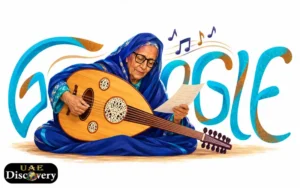
Perhaps the one thing that’s been really appreciated by Asma Hamza happened after her passing. Google honoured her as a composer and oud player from Sudan on July 17, 2023, with a doodle. The Doodle highlighted her early love for music, her journey with the oud, and her work as a composer. It commemorated her music competition success in 1997, too.
Her story was brought to a much larger audience thanks to the Google Doodle. It also led to greater awareness of Sudanese music and the contribution of women to the history of the music. The 17th of July was also important due to the fact that it was the anniversary of gaining the prize in the music competition Laylat AlQadr AlKubra in the year 1997.
Why Asma Hamza Is Relevant to UAE Readers
The story is relevant for UAE audiences primarily due to its cultural significance within the region and the 2023 Google Doodle. She was not a UAE musician. She is a Sudanese composer whose career was built in Sudan. The Google Doodle honouring her, though, was shown in the UAE, and UAE papers such as The National and Khaleej Times reported on her. This established the direct relationship between her biography and the search interest in the UAE.
Her story is also relevant for UAE readers in the context of the UAE and Arab world’s cultural connection. Sudanese culture is part of the regional culture. However, it is important to maintain the accuracy of the connection. She is not relevant to the UAE because she did not live or professionally work in the UAE, but she is recognised regionally and covered by the media.
Asma Hamza and Sudanese Culture
Her music was very intricately linked to Sudanese culture. She collaborated with Sudanese poets and singers, and learned about the various musical traditions throughout the country. Her work was influenced by both African and Arab music. When talking about Sudanese music, she also mentioned the pentatonic and heptatonic musical systems.
She has contributed significantly to the culture through the following:
- Collaborating with Sudanese poets and musicians.
- Bringing different musical influences into her compositions.
- Using the oud as an important part of her musical work.
- Soliciting links between Sudanese music and the larger Arab musical tradition.
- Helping preserve and promote Sudanese musical culture.
This blend was to give her music a unique position in Sudanese and Arab music.
Her Death
She died in 2018. Biographical data indicate that she died on 21 May 2018. She was mentioned as deceased in 2018 when the Google Doodle was created in 2023 by the National. Her death had taken place before the international recognition she gained as a result of Google’s Doodle. The doodle was thus a significant honor to her memory for her contribution. It also gave people an opportunity to reflect on her career and her contribution to Sudanese music.
Her Lasting Legacy
Her legacy is not defined by just one song or award. She contributed to the increased awareness of women composers in Sudan. She collaborated with poets and singers, and was involved in larger musical productions, as well as teaching younger musicians and establishing a cultural venue for artist collaboration.
She has left the world with the following:
- Her role in the musical composition of Sudan.
- As one of the first female composers to be recognised.
- She has done a project with Sudanese singers/poets.
- Her contribution to oud playing and music education.
- Her encouragement of younger musicians and artists.
- A popular Google Doodle in 2023 led to her greater exposure.
Her story is also a testament to perseverance. Her initial interest was in singing, but singing wasn’t an option, and so she took another path into music. She learnt to play oud, learnt to tune and became a composer. That trip makes her biography more relevant than Sudanese music.
Why Her Story Still Matters
Her story is current because it’s a tale of music, culture, and social change. She began composing when women were underrepresented in composition. She decided not to give up on music, honed her talents, and eventually formed a career in music. Her music also contributes to the broader history of Arab music from a Sudanese point of view.
Traditionally, international coverage of Arab music has been on major performers and recording centres, particularly in Egypt and Lebanon. Her journey tells the tale of Sudanese musicians and their contributions to regional music. For those in the UAE, it’s a chance to learn about one of the region’s cultural icons whose work was made visible decades after her career took off.
Conclusion
Asma Hamza’s tale is an essential component of the history of Sudan’s music. She started with a love for singing, learned the oud, and later became a composer. She was also a singer and poet herself, and her work with these artists helped to secure her a lasting role in Sudanese music. The feat she made in the 1997 competition was an important stepping stone in her career. Her story was made accessible to a much wider audience in 2023, when Google’s doodle featured her.
Her legacy is present in her music, with other artists, and in her contribution to women’s music in Sudan. In addition, her story demonstrates the power of perseverance in breaking through social and professional barriers.
Read Also: Dr. Saniya Habboub
Frequently Asked Questions
Who was Asma Hamza?
Asma Hamza (1932-2013) was a Sudanese composer and oud player. She was renowned for her compositions, work with singers and poets, and for her involvement in Sudanese music.
What instrument did she play?
She was a virtuoso on the oud, a traditional string instrument from the Middle East. Her father found her musical talent and bought her an oud.
When did she win the 1997 competition?
She participated in the music competition Laylat AlQadr AlKubra and was one of its winners on July 17th, 1997.
Why did Google create a Doodle for her?
On July 17, 2023, Google made a Doodle to honor her life and legacy in Sudanese music and to commemorate her 1997 competition victory.
Was she from the UAE?
No. She was Sudanese. She had a personal experience with UAE readers after the Google Doodle was released there, and the UAE-based media covered her for her appearance.
When did she die?
She died in 2018. Biographical records indicate that she died on 21st May, 2018.